
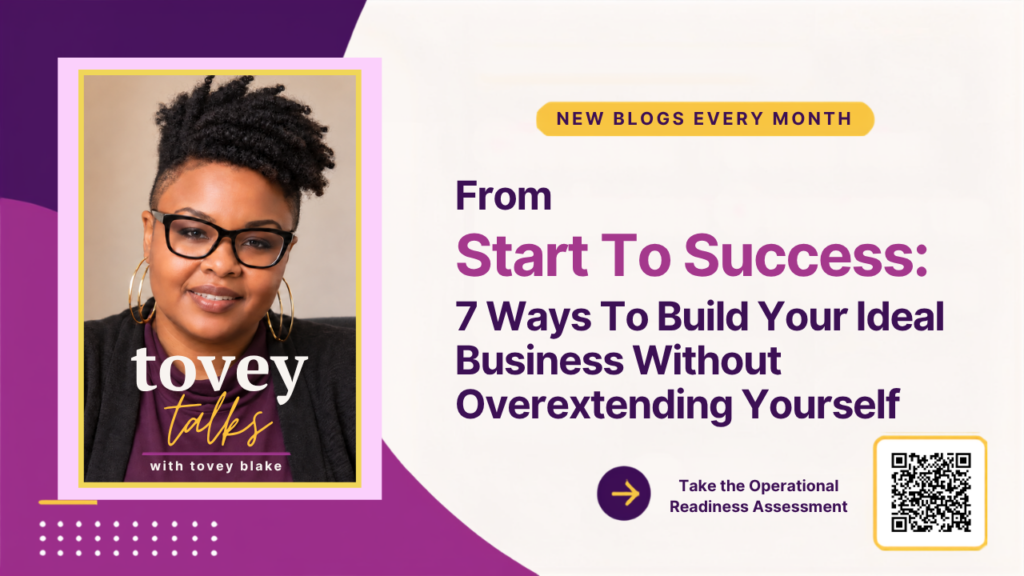

Many people start a business with the best intentions, they pour their heart and soul into building a successful business, only to find that it’s not sustainable.
As you develop your business, one thing is for sure you will need to grow. The most successful businesses are built on the backs of those who grew from their humble beginnings and became more than they ever thought possible.
We want our business owners to take the time to read this. We know things can get overwhelming whether you are starting out, trying to create the best business ideas, or trying new things.
We want to see you succeed.
This is why I wrote this article for you to teach you five steps on how to build an ideal business while keeping your sanity intact.
What is an ideal small business?
An ideal small business is when the business owner has established within themself (and hopefully a business plan) what makes their company the best place to work, for clients to do business with, and great financial margins.
For example, optimal creativity, idea creation, independence, flexibility, client loyalty, and the ability to operate with minimal overhead and expenses.
The ideal small business has a few key features that make it successful. These include low overhead costs, limited expenses, and easy access to funding.
Ultimately, control their own career path and deliver high-quality products or services.
Starting a business is not for the faint-hearted. Success seems like a far-off dream and you are just trying to survive each day as the bills pile up, your family is struggling, and stress levels skyrocket.
I promise you the rewards outweigh the struggles.
What are some of the key characteristics you should consider when creating an ideal business?
An ideal business is one that has a clear mission, vision, and values.
Strong leadership with the ability to make fast decisions in order to stay competitive.
It should also have a great culture that values growth, creativity and innovation. Other characteristics that every business should include, but are not limited to: the business is easy to understand, clear and consistent goals, and core competencies.
How to Get Through The Tough Moments
There are few things worse than overextending yourself in order to build that ideal business.
All it takes is a handful of bad decisions and suddenly you find yourself stuck with debt, no followers or customers or leads…and not much else!
What’s the solution?
Tip 1: Developing an Ideal Business Model
Developing an ideal business model is a challenging process.
The process of developing an ideal business model is systematic. Some of the factors you should consider when developing an ideal business model:
-
Market Research
-
Type of product/service the company offers
-
Competition
-
Market Size
-
Marketing strategy
-
Pricing structure
-
Customer segments
The key to developing your own business model is finding out what makes you different from the competition and focusing on that uniqueness in order to stand out from the crowd.
An ideal business model is one that will allow companies to grow and prosper, while also maximizing profits
Tip 2: Setting Goals
The first step in creating a successful small business is setting goals for each day. This will help you stay on track and avoid overextending yourself. Without specific goals, it’s difficult to measure your progress or adjust your strategy as needed. Setting achievable goals allows you to take small steps forward while keeping the end goal in sight.
Setting daily goals will also help keep you motivated since you’ll know that even if today wasn’t as good as yesterday, tomorrow can be better based on your progress so far. Achieving daily objectives can also lead to long-term success because it builds momentum and reinforces positive habits over time.
There are many ways to set daily goals, but some common methods include writing down what you want to accomplish during the day, breaking tasks and down into smaller chunks that are easier to achieve, making a list of things that have already been accomplished (both big and small), using triggers (such as crossing off items when they’re completed), and setting a timer for a certain amount of time (such as 30 minutes) in order to give yourself deadlines without feeling pressure。
Tip 3: Set Realistic Expectations
The second tip is to set realistic expectations for your time. This will help you avoid overextending yourself each workday. Overextending yourself can lead to burnout, and it will be difficult to produce quality content when you’re feeling tired and stressed. Instead of setting unrealistic goals, make sure that each task you take on meets a real need or goal that you have for your business. When tasks are manageable and fit within the boundaries of what you’re able to do in a day, it’ll be easier for you to stay focused and productive.
When tasks are manageable and fit within the bounds of what you’re able to do in a day, it’ll be easier for you to stay focused and productive.”
Tip 4: Take Breaks When You Need Them
If you’re working hard, but not taking the time to relax and recharge, you’ll eventually burn out. And when that happens, it’s difficult to get back on track.
Overexerting yourself each workday can lead to unnecessary stress and anxiety, which will, in turn, affect your productivity and motivation. To prevent this from happening, make sure you take some time for yourself every day – whether that means going for a walk or catching up on your reading in peace. It might seem like a small thing, but it’ll add up over time – and that’ll be worth its weight in gold when it comes to staying productive all week long!
Bonus Tip: The Power of Delegation
The power of delegation is the act of systematically handing off tasks to others so that you can focus on other, more important aspects. It enables users to put their energy into a specific area of the process, and then have a team take over to ensure that tasks are completed.
In 2013, I was about 15+ years into my administrative career in the corporate sector. I was invited to be involved in a short-term project opportunity.
At the tail end of the project, everyone was stretched. Many were taking on their regular job activities in addition to their project member role on my teams.
During my performance review at the end of the year, I was offered a newly created Administrative Supervisor position. I was delighted until I was told that I would need to delegate some of the responsibilities in order to take on this new role.
I can’t lie initially I was very resistant. I really could not comprehend why I couldn’t just add the new responsibilities to my new role.
By letting go, creating space, and beginning to communicate with my team members more regularly, I was able to quench my desire to learn, create a balanced workload, further develop other employees, and increase the organization’s revenue by being able to take on new projects.
Tip 5: Take inventory of the activities you are completing manually
I recently did a discovery call with a potential client who released a new program at the onset of the pandemic and has taken on an estimated 200 new clients.
I listened intently as she explained the process and the significant amount of time she spent preparing and sending out certificates of completion on a daily basis.
I turned around and said to her, “What program do you use to do this”, she told me, and I simply said to her “You know they have an online software tool that you can automate that process?”.
She laughed and said to me through the Zoom call “I did not even know there was such a thing, see you are already adding value”.
According to a research study conducted by Automation Anywhere, a team of five people who spent 3 percent, 20 percent, 25 percent, 30 percent and 70 percent of their time on repetitive tasks, respectively, reduced their time spent to 3 percent, 10 percent, 15 percent, 15 percent and 10 percent through automation.

Tip 6: Getting Spiritually Enlightened on a Daily Basis
I start off my day by committing it to God, asking Him to be present as I interact with people and create opportunities where He is using me to live out the life He has planned for me.
I don’t know about you, but there is not one day that goes by that I do not have to go beyond taking a break.
By starting my day off this way it is easier to pull myself back in when I find myself engaging overwhelm vs. inspiration.
Whatever it is for you – affirmations, mediation, prayer – choose to surrender to a power greater yourself.
Tip 7: Acquiring High-Value Clients
What is a high-value client?
A high-value customer is a person who spends with you frequently and makes purchases that include things like upgrades, add-ons, subscriptions or professional services.
This type of client has the potential to turn into a loyal client because they know the value of what they are receiving.
As well, they love your product or service so much that they will refer you to friends and family.
How do you identify high-value clients?
High-value clients are those who have a high propensity to purchase your products or services no matter the price. You can identify potential high-value clients by:
-
Looking at their online behaviour
-
Using a data-driven approach
-
Analyzing the search engines, they’re using to find you
-
Trusting in your company and your brand makes them more likely to buy from you again in the future
The best way to identify high-value clients is by looking at your last three years of revenue, profit margins, and the number of employees.
What are the benefits of acquiring high-value clients?
High-value clients are customers who have a lot of money and spend more than you do.
The benefits of acquiring high-value clients are the ability to generate more revenue, new business opportunities, and a higher return on investment.
In addition, they can help businesses boost their sales, profits, revenue, and a new audience base.
High-value clients are usually your “most profitable customers.”
These tips will help you create a roadmap for success and reach your desired outcome.
First, they can help refresh your mind and body so that you’re able to be more productive when you return to work.
Next, you will help you stay healthy and productive, instead of experiencing stress headaches and sleep deprivation.
The goal of these tips is to help you achieve the ideal small business status quo that meets your needs and desires without overworking yourself which can lead to burnout.
How can you make your business successful?
Successful businesses are those that accomplish their goals. This may be in the form of growth or profits, but they all have one thing in common: they succeed at what they set out to do.
Overworking yourself decreases your chance of success because it decreases your productivity and ability to focus. As a result, it is harder to think clearly and make good decisions on developing new strategies and/or improving existing ones.
What are the other ideal business solution ideas?
-
Research what businesses are doing well in your industry and model your business after them.
-
Build a strong team of professionals who share your vision and values.
-
Use social media to promote your business, but be sure to stay consistent with the message you’re trying to send.
-
Stay on top of technology changes and make sure that you have an up-to-date website that reflects the brand you want to create for yourself.
-
Keep track of trends in your industry so that you can anticipate future opportunities and keep up with changing consumer behaviour.
A good business model increases the likelihood of success and has a great impact on the overall value of your company.
A strong business model often results in increased customer loyalty, increased brand awareness, develop new segments & opportunities, and higher future profits. Building an ideal business is not easy, but it is possible.
One of the most rewarding things about being an entrepreneur is the ability to build something from nothing. Building a business is not easy, but it’s possible.
The most important part of starting a small business is not quitting before you get there. By following these six tips, you can build your ideal business without overextending yourself.
Building an ideal business takes time, energy, and dedication. However, it is possible to achieve your goals without overextending yourself. Use these six tips to create a business that is both successful and sustainable.
Be patient with yourself and don’t rush success before it’s ready!
Celebrate small wins, every victory counts! Take some time each week to celebrate these smaller milestones so that progress feels sustainable and exciting instead of frustratingly slow-moving. Celebrating success along the way encourages you to keep going – even during tough times.
There you have it – six ways to build your ideal business without overextending yourself.
If you need help putting any of these tips into action, visit abovealladmin.com or drop me a line at info@abovealladmin.ca. I’d love to chat with you about how I can help you take your business to the next level.